
Rare blue dragon sea slugs have washed up along several Texas beaches, prompting researchers to warn beachgoers not to touch the striking creatures because of their powerful sting.
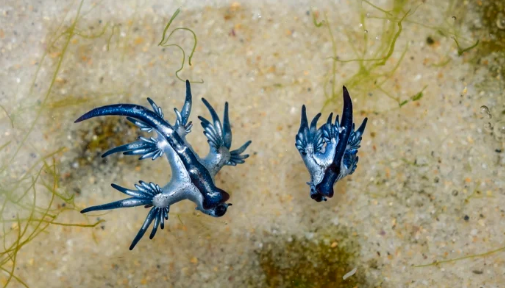
Beachgoers along the Texas coast are being cautioned by researchers against touching rare blue dragon sea slugs that have recently appeared on several beaches, including North Padre Island, Surfside Beach, and Galveston.
In a recent social media update, the Harte Research Institute announced the discovery of approximately 20 blue dragons along a brief section of beach on North Padre Island.
By Friday afternoon, further reports of the creatures emerged at Surfside Beach and in Galveston.
People recognize blue dragons, small sea slugs with vivid colors, not only for their striking appearance but also for their potent sting.
Jace Tunnell, the director of community engagement at the Harte Research Institute, has warned that the vibrant blue color and feather-like appendages of these creatures can pique onlookers' curiosity. However, he cautions that touching them may pose significant risks.
“They are truly magnificent in appearance,” Tunnell stated. Experts describe the creatures as bright blue, adorned with silver streaks, and resembling those with delicate feather-like appendages. It creates a compelling urge to reach out, yet there remains a hesitation to do so.
According to the National Oceanic and Atmospheric Administration, blue dragons primarily feed on the tentacles of the Portuguese man-of-war, a marine creature closely related to jellyfish. Sea slugs have been observed to store the stinging cells from the man-of-war within their appendages.
The adaptation observed in these small creatures enables them to deliver a surprisingly powerful sting when they feel threatened.
Tunnell reported that when a blue dragon is compressed or stepped upon, it can release its stored stinging cells all at once.
“It truly delivers a powerful impact,” Tunnell stated.
The appearance of these uncommon creatures along Texas beaches is associated with seasonal conditions. Tunnell reported that sightings generally occur from February to March, coinciding with strong onshore winds that bring specific marine species closer to shore.
Blue dragons are typically discovered in the company of three other organisms that float with ocean currents: the Portuguese man-of-war, the blue button, and the by-the-wind sailor.
According to Tunnell, “They’re associated with three other animals: the Portuguese man-of-war, the blue button, and the by-the-wind sailor.” “The occurrence of blue dragons washing in is primarily contingent upon the simultaneous presence of all three factors.”
Tunnell advised beachgoers to observe the creatures from a safe distance and to photograph them rather than attempting to touch them.
Officials have issued a warning to beachgoers about Portuguese man-of-war along the shoreline, noting that their stings can cause significant pain. Individuals who experience breathing difficulties or vomiting after a sting are advised to seek emergency medical assistance immediately.
.png)
.png)
.png)


